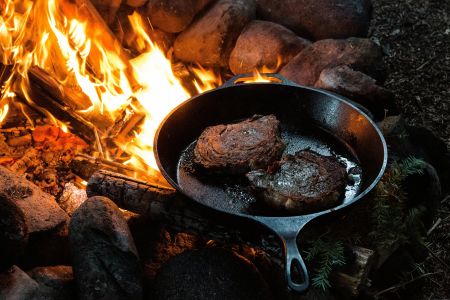
🔥 The Campfire Chef's Secret: How to Properly Season and Care for Your Cast Iron Skillet (Campfire Edition)
For any serious outdoor cook, the cast iron skillet isn't just a piece of cookware—it's a trusted partner. Unlike lightweight camping pots, a well-cared-for skillet will deliver perfect sear, even heat, and flavor that only comes from years of use. But camp cooking—with its intense, uneven heat and smoky environment—requires specialized cast iron skillet maintenance.
This guide breaks down exactly how to season a cast iron skillet for camping, provides the best camp cooking tips for maximizing your skillet's performance, and shows you how to handle the critical step of cleaning cast iron after a campfire.
Part 1: Initial Seasoning (The Foundation)
Most modern cast iron comes "pre-seasoned," meaning you can use it right away. However, building a rock-solid, non-stick surface is the best way to protect your skillet from the harsh elements of a campfire.
What is Seasoning?
Seasoning is not just oil; it's polymerized oil—fat that has been baked onto the iron's surface until it forms a hard, slick, protective layer. This layer prevents rust and creates a natural, non-stick cooking surface.
The Best Oil for Campfire Seasoning
When choosing your oil, look for one with a high smoke point. This helps the oil polymerize correctly without turning into a sticky, gummy mess.
Best Options: Grapeseed oil, Canola oil, or Lodge-specific seasoning blends.
Why Not Olive Oil? Extra Virgin Olive Oil has too low a smoke point and is best avoided for seasoning.
Quick Campfire Re-Seasoning (Daily Maintenance)
If your pan is already seasoned, you can give it a quick maintenance coat right at your campsite:
Heat & Wipe: After cleaning (see Part 3), place the skillet back on the residual coals or over very low heat for a few minutes to ensure it is bone dry.
Apply Oil: Remove from heat. Using a cloth or paper towel, apply a very thin coat of your chosen high smoke-point oil to the entire pan—inside and out.
Wipe It Off: Crucially, wipe the pan down with a clean towel until it looks dry. If there's excess oil, it will pool and turn sticky.
Heat Again (Optional but Recommended): Place the skillet back on the low heat or in the dying embers for 10-15 minutes until it just starts to smoke (reaching the oil's smoke point). This sets the oil and bonds it to the surface.
Part 2: Camp Cooking Tips for Protecting Your Seasoning
Campfire cooking is notoriously hot and unpredictable, which can be tough on seasoning. Follow these tips to keep your pan performing perfectly.
1. Avoid Thermal Shock
Rapid temperature changes can cause the seasoning layer (and sometimes even the iron itself) to stress and crack.
Pro Tip: Never dunk a blazing hot cast iron skillet into cold water. Wait until the pan has cooled considerably on the ground or in the air before you begin to clean it.
2. Cook with Fat
The simple act of cooking with oil or butter is your best defense. Foods high in natural fats, like bacon, steaks, and sausage, are a fantastic way to naturally refresh the seasoning as you cook.
3. Know Where to Place Your Skillet
The center of a roaring fire is too hot. For the best results:
Use Coals, Not Flames: Pull a bed of glowing, consistent coals to the side of your main fire pit and cook over those.
Invest in a Cooking Grate: A sturdy tripod or grill grate keeps your skillet level and at a predictable distance from the heat source.
4. Postpone Acidic Recipes
For the first few trips, avoid cooking high-acid foods like tomato sauces or vinegar-based marinades in your cast iron. Acid can eat away at the seasoning layer. Stick to searing, frying, and baking until your seasoning is strong and multi-layered.
Part 3: Cleaning Cast Iron After a Campfire
This is the most crucial step for cast iron skillet maintenance outdoors. The goal is to remove food residue without stripping the essential seasoning.
Step | Action | Detail |
1. Scrape While Warm | Remove major debris. | While the pan is still warm (but not blazing hot), use a metal spatula or a plastic cast iron scraper to push off any stuck-on food. |
2. Use Water & Scrub | Clean the surface. | Add a splash of hot water (if available) and use a stiff brush or a chain mail scrubber. Never use steel wool. A small amount of mild soap is okay on a well-seasoned pan, but typically hot water and friction are all you need. |
3. Use a Salt Scrub (For Stuck Messes) | The best natural abrasive. | If food is stubborn, pour in 1-2 tablespoons of coarse salt (kosher or sea salt) and a teaspoon of cooking oil. Scrub vigorously with a paper towel. The salt acts as a gentle abrasive. Rinse clean. |
4. Dry Immediately (Crucial!) | Eliminate all moisture. | Cast iron rusts incredibly fast. Use a towel to wipe the pan dry, then place it back on the low-fire coals or over a camp stove burner for 5 minutes until all moisture has evaporated. |
5. Lightly Oil | Lock in the protection. | Once the pan is dry and still warm, rub a pea-sized amount of oil (or a cast iron conditioner) over the entire surface. This is your insurance policy against rust while in storage or transit. |
Your Cast Iron Checklist for the Road
To make sure your skillet travels and stores well, be sure to pack these essential items:
✅ High-Smoke-Point Oil: In a small, sealed container for re-seasoning.
✅ Chain Mail Scrubber: The ultimate tool for removing stuck food without damaging the seasoning.
✅ Coarse Salt: For stubborn food messes.
✅ Canvas or Storage Bag: Never store your seasoned cast iron loose in a plastic bag where condensation can cause rust. A canvas bag or dedicated cast iron lid cover works best.
A well-cared-for cast iron skillet will last a lifetime, delivering incredible camp cooking results from burgers to baked cobblers. Treat it well, and it will be the most cherished item in your camping kitchen.
🛒 Ready to upgrade your campfire kitchen?
Check out our top-rated cast iron skillets and maintenance kits perfect for your next wilderness adventure! https://www.campingemporium.com/cooking-dining
